
You have a bottle of vodka and a packet of vanilla beans. The next question is simple: how many vanilla beans do you need for that bottle of extract?
The most dependable answer is a weight, not a bean count. Vanilla pods vary in length, moisture, and thickness, so six beans from one packet may weigh considerably more than six from another. Weighing your beans makes your recipe easier to repeat and scale.
For a convenient home recipe, use approximately 28 grams of vanilla beans for every 237 millilitres of alcohol. That is about 1 ounce of beans by weight for 8 US fluid ounces of spirit. This guide applies that same ratio to common bottle sizes and explains how to calculate your own batch.
Quick Answer: How Many Vanilla Beans per Bottle?
Start with these approximate amounts for a home infusion:
- 100 ml of alcohol: 12 g of vanilla beans.
- 250 ml of alcohol: 30 g of vanilla beans.
- 375 ml of alcohol: 45 g of vanilla beans.
- 500 ml of alcohol: 60 g of vanilla beans.
- 750 ml of alcohol: 90 g of vanilla beans.
- 1 litre of alcohol: 120 g of vanilla beans.
These amounts are based on measured alcohol volume, not the capacity printed on an empty jar. They are rounded home-recipe quantities, not laboratory confirmation of a finished extract’s strength or compliance with commercial standards.
Use an unflavored food-grade spirit such as 40% ABV vodka for a straightforward first batch. Leave enough room in the container for the beans and a little headspace, and keep the bean pieces covered by liquid.
Why Bean Weight Matters More Than Bean Count
A whole vanilla bean is not a standardized measuring unit. Beans from the same origin can still differ in size and condition. A long, moist gourmet pod may weigh much more than a shorter, drier extraction-grade pod.
This creates a problem with instructions such as “put six beans in a bottle.” Without knowing the beans’ weight and the bottle’s actual alcohol volume, you cannot reliably reproduce the recipe.
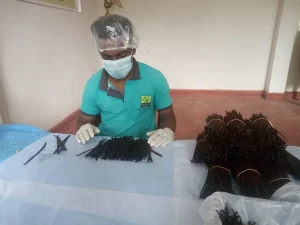
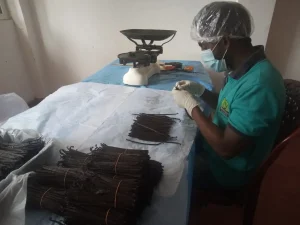
Counting is useful for dividing a packet or estimating how many pods you might handle. It is less useful for comparing extraction recipes. A small digital kitchen scale lets you measure the ingredient that matters more consistently: the total bean material going into your batch.
The Vanilla Extract Calculator Formula
You do not need an app to scale this home recipe. Use this simple working formula:
Vanilla beans needed in grams = alcohol volume in millilitres × 0.12
For example, a 500 ml batch requires approximately 500 × 0.12 = 60 g of beans. A 750 ml batch requires approximately 750 × 0.12 = 90 g.
The factor 0.12 is a convenient rounded version of the 28 g per 237 ml recipe. Use it consistently rather than switching between slightly different ratios halfway through a batch.
If you prefer US measurements, use approximately 1 ounce of beans by weight for every 8 US fluid ounces of alcohol. Remember that ounces of beans measure mass, while fluid ounces of spirit measure volume. They are not interchangeable units.
Calculate Alcohol Volume from the Beans You Have
You can reverse the formula when your bean supply is the limiting ingredient:
Alcohol volume in millilitres = bean weight in grams ÷ 0.12
For example, 25 g of beans works out to approximately 208 ml of alcohol using this rounded recipe. For practical home measuring, you could use about 200 ml rather than diluting that small packet into a much larger bottle.
With 50 g of beans, the same calculation gives approximately 417 ml of alcohol. Choose a convenient measurable volume close to that amount and record your actual ingredients on the batch label.
Bottle-Size Guide for Homemade Vanilla Extract
Small Bottles: 100 ml and 125 ml
For 100 ml of alcohol, use approximately 12 g of beans. For 125 ml, use approximately 15 g. Small batches are useful for comparing origins or spirits without committing a large amount of ingredients.
The jar still needs room for the pods. Shorten the beans into pieces if necessary, and choose a container that keeps them covered without requiring extra unmeasured alcohol.
A 250 ml Bottle
Use approximately 30 g of beans for 250 ml of alcohol. This is a convenient small batch, but a bottle with a total capacity of 250 ml will not necessarily accommodate 250 ml of spirit plus the beans.
Measure the alcohol separately and choose a larger infusion jar. You can transfer the mature, strained liquid into smaller serving bottles later.
A 375 ml Bottle
Use approximately 45 g of beans for 375 ml of alcohol. This size suits someone who wants more than a trial batch without using a full 750 ml bottle of spirit.
If you buy beans by count, ask the supplier for an approximate pack weight. Do not assume that a particular number of pods will always add up to 45 g.
A 500 ml Bottle
Use approximately 60 g of beans for 500 ml of alcohol. A roomy glass jar makes preparation easier than trying to force the pods into a spirit bottle filled almost to the neck.
Record the actual weight and volume. If you divide the batch between two jars, divide both the beans and alcohol proportionally.
A 750 ml Bottle
Use approximately 90 g of beans for 750 ml of alcohol. This is a common spirit-bottle size, but the original bottle may not have sufficient spare capacity for the added beans.
Transfer the measured alcohol and prepared beans to a larger suitable jar. Alternatively, make two smaller batches using the same ratio. Removing an arbitrary splash from the bottle makes the recipe harder to calculate unless you measure what remains.
A 1 Litre Batch
Use approximately 120 g of beans for 1 litre of alcohol. A larger batch is convenient when you bake regularly or plan gifts well in advance.
Can You Estimate the Number of Beans?
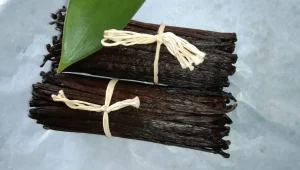
Yes, but only after estimating their average weight. Weigh a representative group of beans from your packet and divide the weight by the number of beans. Then divide your required recipe weight by that average.
For example, if ten beans weigh 25 g, the average is 2.5 g per bean. A 30 g batch would need approximately twelve beans from that particular packet.
If another packet averages 4 g per bean, the same 30 g target would require about seven and a half beans. You can cut and weigh a partial bean rather than treating whole-bean count as an absolute rule.
These numbers are illustrations, not typical weights guaranteed for any grade or origin. The simplest method remains weighing the full amount you actually plan to use.
Should You Use Grade A or Grade B Beans?
Both can be used for home extraction. Grade B is commonly marketed for extract-making and is often drier than gourmet Grade A. Grade A beans are commonly chosen for easy splitting and scraping, but they are not restricted to those uses.
Supplier grading conventions vary. Read the description and ask about intended use rather than assuming the grade label tells you every relevant specification.
For a practical extraction option, explore our Sri Lankan Grade B vanilla beans: https://purevanillabeans.com/product/sri-lanka-grade-b-vanilla-beans/. Confirm the pack weight before calculating your batch, especially when the available options are listed by bean count.
Do not assume that a more expensive or moister bean automatically means you can use fewer pods. For repeatable home results, begin with a recorded weight-based recipe and evaluate the finished flavor.
Home Recipe Ratios vs Commercial Extract Standards
The 1-ounce-per-8-fluid-ounce guideline is a convenient home recipe. It should not be described as the exact wording of the US legal standard or as an FDA-approved homemade formula.
US rules for vanilla extract specify minimum alcohol content and vanilla constituent in the finished product. The definition of a bean unit also accounts for moisture. Measuring a starting bean weight and spirit volume does not establish complete extraction, finished alcohol percentage, or commercial compliance.
This distinction matters if you plan to sell extract rather than make it for your own kitchen. Consult the rules that apply to your market and seek suitable technical guidance. A kitchen calculator is not a substitute for formulation control or finished-product verification.
How to Prepare Your Calculated Batch
Step 1: Measure Before Filling
Choose your alcohol volume, calculate the bean weight, and weigh the beans. Use clean, completely dry food-safe equipment and an appropriate glass container with a tight-fitting lid.
Step 2: Prepare the Pods
Split the beans lengthwise or chop them into smaller pieces. Keep the pod material and seeds for the infusion. Cut pieces short enough to remain beneath the liquid rather than adding extra alcohol simply to cover long pods.
Step 3: Add Alcohol and Label
Add the measured spirit, close the jar, and shake gently. Record the bean weight, alcohol volume, spirit type and ABV, origin, and start date. Never use rubbing alcohol, denatured alcohol, or another non-food-grade solvent.
Step 4: Allow Time for Infusion
Store the sealed jar in a cool, dark cupboard and shake gently periodically. Begin checking flavor after a few months, with six to twelve months as a useful planning window for a fuller home infusion. Timing varies; brown color alone does not prove readiness.
Do not heat spirits to accelerate the process. Keep the beans submerged and do not use ingredients with suspicious growth or an unexpected musty smell.
Common Calculator Mistakes to Avoid
Using jar capacity instead of measured spirit volume is one of the easiest mistakes to make. Calculate the liquid you add, not the number printed on the container.
Mixing US fluid ounces with weight ounces also produces confusing recipes. Label your measurements clearly, or use grams and millilitres throughout.
Topping up a partly used jar changes the balance. Fresh alcohol dilutes what remains, while previously extracted beans have already released some flavor. Start a separate measured batch when consistency matters.
Finally, do not confuse starting liquid with finished yield. Beans retain liquid, and filtering causes some loss. A batch that begins with 500 ml of spirit may not provide five completely full 100 ml gift bottles.
Frequently Asked Questions
How Many Vanilla Beans Do I Need for 750 ml of Vodka?
For this home recipe, aim for approximately 90 g of vanilla beans. The number of individual pods depends on their weight, so weigh the beans rather than choosing a fixed count.
Is 25 g of Beans Enough for a 250 ml Bottle?
Our rounded recipe calls for about 30 g for 250 ml of alcohol. If you have 25 g, use approximately 200–210 ml of spirit for a similar starting ratio. Other recipes may use different loadings.
Can I Add More Beans Later?
You can, but record the added weight and date. New beans require additional extraction time, so the entire jar should not be treated as uniformly mature immediately after the addition.
Start with a Measured Recipe
The easiest way to answer how many vanilla beans per bottle is to stop relying on pod count alone. Measure your alcohol, calculate the required bean weight, and choose a container with enough space.
Use this guide as a home-recipe starting point, keep clear batch records, and adjust future batches to your preference. Browse our Grade B vanilla beans at https://purevanillabeans.com/product/sri-lanka-grade-b-vanilla-beans/, or request available quantities and current lot information at https://purevanillabeans.com/#quote-form.