Vanilla Price in Sri Lanka 2026 – Ceylon Vanilla Grades, Weight, Moisture & Buying Guide
Are you looking for the latest vanilla price in Sri Lanka in 2026? Whether you want to buy vanilla beans for home baking, homemade vanilla extract, restaurants, food manufacturing or wholesale supply, understanding vanilla grades, bean weights, moisture content and pod lengths can help you make the right purchasing decision.
Sri Lanka produces natural vanilla beans, commonly marketed as Ceylon vanilla beans, which are valued for their aroma and versatility in baking, desserts and flavouring.
At Pure Vanilla Beans, we offer natural Sri Lankan vanilla beans in Grade A Gourmet and Grade B Extract categories, with prices based on grade, length, moisture content and order quantity.
In this guide, you will discover:
- Vanilla bean prices in Sri Lanka for 2026
- Grade A and Grade B vanilla bean differences
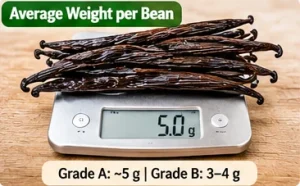
- How much one vanilla bean weighs
- How many vanilla beans are in 100 g, 500 g and 1 kg
- Vanilla moisture content and its importance
- Vanilla prices for different pack sizes
- Where to buy natural Ceylon vanilla beans in Sri Lanka
1. Vanilla Price in Sri Lanka – 2026 Price List
The price of vanilla beans in Sri Lanka depends on several factors, including bean length, grade, moisture content, curing quality and quantity purchased.
Longer, well-cured vanilla beans generally command higher prices, particularly when their appearance is important for retail or premium culinary applications.
The following are Pure Vanilla Beans’ reference retail prices in Sri Lankan rupees (LKR) for 2026. They are not national market averages.
Grade A Gourmet Vanilla Beans Price in Sri Lanka
Grade A Gourmet vanilla beans generally have a moisture content of approximately 25–30%, making them soft, flexible and suitable for premium culinary applications.
| Vanilla bean length | Price per kg (LKR) |
|---|---|
| Over 17 cm | Rs. 70,000 |
| 16–17 cm | Rs. 65,000 |
| 15–16 cm | Rs. 55,000 |
| Under 15 cm | Rs. 50,000 |
Grade A vanilla beans are commonly used in premium desserts, cakes, ice cream, custards, chocolates and vanilla bean paste.
Grade B Extract Vanilla Beans Price in Sri Lanka
Grade B vanilla beans generally contain approximately 15–25% moisture under our grading specifications. They are typically firmer and drier than Grade A beans.
| Vanilla bean length | Price per kg (LKR) |
|---|---|
| Over 17 cm | Rs. 65,000 |
| 16–17 cm | Rs. 60,000 |
| 15–16 cm | Contact for price |
| Under 15 cm | Contact for price |
Grade B vanilla beans are commonly selected for vanilla extract production, infusions and commercial flavouring.
Looking to buy vanilla beans in Sri Lanka? Explore our natural vanilla beans collection for available products and quantities.
Note: Prices are reference prices and may change depending on harvest, stock availability, order quantity and market conditions.
2. What Is the Difference Between Grade A and Grade B Vanilla Beans?
Understanding vanilla bean grades is essential when comparing vanilla prices in Sri Lanka.
Although both grades can provide natural vanilla flavour, they differ in moisture, appearance, texture and intended use.
| Feature | Grade A Gourmet | Grade B Extract |
|---|---|---|
| Moisture content | 25–30% | 15–25% |
| Texture | Soft and flexible | Firmer and drier |
| Appearance | Plump, often glossy | Generally leaner |
| Approximate beans per kg | 200 | 250–330 |
| Average bean weight | 5 g | 3–4 g |
| Main uses | Baking, desserts, paste | Extract, infusions, powder |
| Typical price | Higher | Lower |
Grade A Gourmet Vanilla Beans
Grade A beans are often preferred for recipes where the whole pod or vanilla seeds are used directly.
Their softer texture makes them easier to split open and scrape.
Grade A vanilla is suitable for:
- Premium cakes and desserts
- Homemade vanilla ice cream
- Custards and puddings
- Vanilla bean paste
- Chocolate and confectionery
- Professional baking
Grade B Extract Vanilla Beans
Grade B vanilla beans contain less moisture and are generally more economical.
They are commonly used for:
- Homemade vanilla extract
- Commercial vanilla extract
- Vanilla sugar
- Vanilla powder
- Flavour infusions
- Food manufacturing
Is Grade B vanilla lower quality?
Not necessarily. Grade B is a different commercial category, and properly cured Grade B beans can be an excellent choice for extract production.
Learn more in our Grade A vs Grade B Vanilla Beans Guide.
3. How Much Does One Vanilla Bean Weigh?
One of the most frequently asked questions from vanilla buyers is: How much does one vanilla bean weigh?
The weight of a vanilla bean depends on its length, thickness, moisture content and curing process.
Based on our reference grading specifications:
| Vanilla grade | Approximate beans per kg | Average weight per bean |
|---|---|---|
| Grade A Gourmet | 200 | 5 g |
| Grade B Extract | 250–330 | 3.0–4.0 g |
These figures are approximate. Individual vanilla beans may weigh more or less.
How Many Vanilla Beans Are in 100 Grams?
For Grade A Gourmet vanilla, 100 g typically contains approximately 20 beans.
For Grade B Extract vanilla, 100 g may contain approximately 25–33 beans.
How Many Vanilla Beans Are in 1 kg?
The following table provides an estimated number of vanilla beans for common pack sizes.
| Pack weight | Grade A beans (approx.) | Grade B beans (approx.) |
|---|---|---|
| 50 g | 10 | 13–17 |
| 100 g | 20 | 25–33 |
| 250 g | 50 | 63–83 |
| 500 g | 100 | 125–165 |
| 1 kg | 200 | 250–330 |
The actual number depends on the size and moisture content of each batch.
For wholesale customers, buying vanilla beans by weight rather than pod count can make price comparisons easier.
4. Vanilla Bean Prices for 50 g, 100 g, 250 g, 500 g and 1 kg in Sri Lanka
Not every customer needs a full kilogram of vanilla beans.
Home bakers, cafés, restaurants and small food businesses often prefer smaller packs.
At Pure Vanilla Beans, customers can enquire about different weight-based and pod-count packaging options.
Example: Grade A Gourmet Vanilla Beans Over 17 cm
The following prices are calculated using our reference price of Rs. 70,000 per kilogram.
| Pack size | Reference price (LKR) |
|---|---|
| 50 g | Rs. 4,375 |
| 100 g | Rs. 8,750 |
| 250 g | Rs. 21,875 |
| 500 g | Rs. 35,000 |
| 1 kg | Rs. 70,000 |
Packs below 500 g include a 25% small-pack premium under this example pricing model.
Vanilla Bean Packs by Number of Pods
Customers may also enquire about packs containing:
- 5 vanilla beans
- 10 vanilla beans
- 20 vanilla beans
- 50 vanilla beans
- 100 vanilla beans
The price of pod-count packs depends on the grade, length and average weight of the beans.
For the latest pack prices, visit our vanilla beans shop or contact us on WhatsApp.
5. Vanilla Moisture Content – Why Is It Important?
Moisture content is an important factor affecting the texture, weight, flexibility and storage of cured vanilla beans.
Grade A Vanilla Moisture – 25–30%
Grade A Gourmet vanilla beans generally have a higher moisture content than Grade B beans.
This helps provide a softer, more flexible texture.
Grade A beans are particularly useful when a recipe requires the pod to be split and the vanilla seeds scraped directly into the mixture.
Common applications include ice cream, custards, cakes, puddings and vanilla paste.
Grade B Vanilla Moisture – 15–25%
Grade B vanilla beans contain less moisture and are generally firmer.
Their lower moisture content makes them suitable for extract production, vanilla sugar and other flavouring applications.
Does More Moisture Mean Better Vanilla?
Not necessarily.
A higher moisture content can increase the weight of a vanilla bean, but quality also depends on:
- Proper harvesting maturity
- Curing and conditioning
- Aroma and flavour
- Bean condition
- Storage
- Intended use
Buyers should consider the overall quality and suitability of the beans rather than choosing based on moisture alone.
6. Does Vanilla Bean Length Affect the Price?
es. Vanilla bean length is one of the factors influencing the selling price of cured vanilla beans in Sri Lanka.
Longer beans may be preferred for premium retail presentation, while shorter beans can offer good value for baking and extract production.
Our vanilla length categories are:
| Vanilla bean length | Category |
|---|---|
| Over 17 cm | Premium long vanilla |
| 16–17 cm | Long vanilla |
| 15–16 cm | Medium vanilla |
| Under 15 cm | Short vanilla |
Are Longer Vanilla Beans Better?
Longer vanilla beans are not automatically better in flavour.
A shorter, properly cured vanilla bean can still provide excellent aroma and flavour.
For vanilla extract and baking applications where the pod is cut or infused, shorter beans may be a cost-effective option.
7. How Is Ceylon Vanilla Grown and Processed in Sri Lanka?
Vanilla is a tropical climbing orchid, commonly cultivated for its aromatic pods.
Sri Lanka has tropical growing conditions suitable for vanilla cultivation, including areas around Kandy and other suitable regions.
Vanilla Cultivation
Vanilla vines require suitable growing conditions, support structures, moisture and careful management.
Commercial vanilla cultivation often involves hand pollination because successful natural pollination may be limited.
After pollination, vanilla pods develop over several months before reaching harvest maturity.
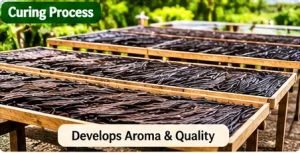
Vanilla Harvesting and Curing
Freshly harvested green vanilla pods do not yet have the full characteristic aroma of cured vanilla.
The curing process helps develop their familiar flavour and aroma.
Curing commonly involves several stages:
- Harvesting: Mature green vanilla pods are carefully collected.
- Killing: The pods undergo a controlled treatment that stops further vegetative development.
- Sweating: Warm conditions encourage biochemical changes associated with flavour development.
- Drying: Moisture is gradually reduced under controlled conditions.
- Conditioning: Beans are stored and monitored as their aroma develops.
- Grading: Finished beans are sorted according to characteristics such as length, appearance, condition and moisture.
The exact curing process varies by producer and production method.
Proper harvesting and curing are essential for producing aromatic natural vanilla beans.
8. Why Choose Natural Ceylon Vanilla Beans?
Sri Lankan vanilla offers an alternative source of natural vanilla for both local and international buyers.
Natural vanilla beans can be used in a wide range of food products, from traditional desserts to premium commercial applications.
Benefits of Natural Vanilla Beans
Rich natural aroma: Properly cured vanilla beans contain aromatic compounds that contribute to their characteristic flavour.
Versatile applications: Vanilla beans can be used in baking, ice cream, custards, confectionery and extract production.
Different grades and sizes: Buyers can choose products based on their intended use and budget.
Local sourcing: Sri Lankan customers can explore locally supplied vanilla rather than relying exclusively on imported products.
For bulk purchasing information, visit our Wholesale Vanilla Beans Guide.
9. Sri Lankan Vanilla vs Madagascar Vanilla
Sri Lankan vanilla and Madagascar vanilla can both be used for premium culinary applications and vanilla extract production.
The flavour and quality of vanilla beans depend on several factors, including the variety, growing conditions, harvesting maturity, curing process and storage.
While Madagascar is internationally recognised as a major vanilla-producing country, Sri Lanka also offers vanilla for customers interested in different sourcing options.
When comparing vanilla from different countries, buyers should consider:
- Grade and quality specifications
- Moisture content
- Bean length and appearance
- Aroma
- Price per kilogram
- Supplier reliability
- Intended culinary use
Read our Sri Lanka vs Madagascar Vanilla Comparison for more information.
10. Where to Buy Vanilla Beans in Sri Lanka
If you are searching for where to buy vanilla beans in Sri Lanka, Pure Vanilla Beans offers Ceylon vanilla for retail and wholesale enquiries.
Our product range includes Grade A Gourmet and Grade B Extract vanilla beans in different lengths and quantities, subject to availability.
We welcome enquiries from:
- Home bakers
- Restaurants and cafés
- Bakeries and dessert businesses
- Ice cream manufacturers
- Vanilla extract producers
- Food manufacturers
- Retailers and wholesale buyers
Customers can enquire about 50 g, 100 g, 250 g, 500 g and 1 kg packs, as well as larger wholesale quantities.
Visit our online vanilla beans collection to explore available products.
11. Frequently Asked Questions About Vanilla Prices in Sri Lanka
What is the vanilla price per kg in Sri Lanka in 2026?
At Pure Vanilla Beans, Grade A Gourmet reference prices range from Rs. 50,000 to Rs. 70,000 per kilogram, depending on length. Grade B reference prices include Rs. 65,000/kg for beans over 17 cm and Rs. 60,000/kg for 16–17 cm beans. Other Grade B prices are available on request.
How many vanilla beans are in 100 grams?
Approximately 20 Grade A Gourmet vanilla beans or 25–33 Grade B Extract vanilla beans, depending on their length, thickness and moisture.
How many vanilla beans are in 1 kilogram?
Our approximate figures are 200 Grade A vanilla beans or 250–330 Grade B vanilla beans per kilogram.
What is the average weight of one vanilla bean?
Grade A beans average approximately 5 g each under our reference specifications, while Grade B beans average approximately 3–4 g.
What is the moisture content of Grade A vanilla beans?
Our Grade A Gourmet specification is approximately 25–30% moisture.
What is the best vanilla grade for making vanilla extract?
Grade B vanilla is commonly preferred for extract production because it is generally more economical and has a lower moisture content.
Can I buy 5 or 10 vanilla beans in Sri Lanka?
Customers can enquire about small pod-count packs, including 5 and 10 vanilla beans, depending on stock and packaging availability.
Are Sri Lankan vanilla beans suitable for baking?
Yes. Properly cured Sri Lankan vanilla beans can be used in cakes, custards, puddings, ice cream, vanilla paste and many other recipes.
Is vanilla powder the same as vanilla beans?
No. Whole vanilla beans contain the pod and seeds. Vanilla powder is a processed product that may be made from ground vanilla beans or other vanilla-derived ingredients, depending on the product specification.
12. Buy Ceylon Vanilla Beans from Pure Vanilla Beans
Looking for natural vanilla beansPure_Vanilla_BeansPrices, weights moisture, grades Pure_Vanilla_Beans_prices and weithts moisture gradesPure_Vanilla_BeansPrices, weights moisture, grades in Sri Lanka at competitive prices?
At Pure Vanilla Beans, we offer Grade A Gourmet and Grade B Extract Ceylon vanilla beans for home users, professional bakers, restaurants and wholesale buyers.
Whether you need 50 g for home baking, 500 g for a restaurant or 1 kg and above for commercial use, contact us to discuss the right grade and quantity.
Pure Vanilla Beans – Ceylon Vanilla from Sri Lanka
Address: No. 06/01, Meegammana West, Wattegama, 20810 Kandy, Sri Lanka
Website: https://purevanillabeans.com/
WhatsApp: +94 76 778 3747
Shop online: Browse Natural Vanilla Beans
Contact us through WhatsApp with your required vanilla grade, bean length, quantity and delivery location to request a quotation.
Prices are Pure Vanilla Beans’ indicative 2026 reference prices, not verified national market averages. Prices and availability may change. Delivery charges are additional.