
Ask any chef to name a vanilla origin and you’ll hear one word: Madagascar. It produces the majority of the world’s cured beans, set the template for what ‘classic vanilla’ tastes like, and owns the Bourbon label. So why are pastry chefs, extract makers and private-label brands increasingly asking us about the other island – Sri Lanka?
Because sri lanka vs madagascar vanilla is not a contest between good and bad. It is a comparison between two terroirs of the same orchid (Vanilla planifolia, cured in the same Bourbon tradition, priced very differently, and suited to slightly different jobs. In this honest comparison we’ll score both origins on flavour, vanillin, price, supply risk and sustainability – and we’ll tell you exactly where Madagascar still beats our own beans.
Sri Lanka vs Madagascar Vanilla: The 30-Second Answer
| Quick verdict Madagascar: the classic. Rich, creamy, buttery ‘ice-cream’ vanilla; 1.5-2.0% vanillin; unmatched name recognition; but a volatile market (2018 peaks of $600-800/kg, 2026 certified Grade A around $60-120/kg FOB) and long collector chains. Sri Lanka (Ceylon): the refined challenger. Same species and Bourbon-method curing, with a softer floral-marshmallow sweetness, a faint smoky-chocolate undertone, typically equal-or-higher vanillin from slow curing, and grower-direct pricing with published moisture specs. Choose Madagascar when the Bourbon label itself sells the product. Choose Sri Lanka when you want flavour complexity, organic small-farm story and cost-per-kilo sanity – especially for extract, paste and private label. |
Same Species, Two Islands: Why Origin Changes the Flavour
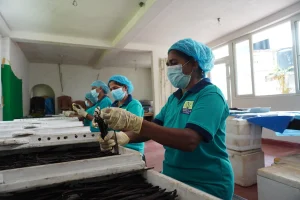
Both islands grow Vanilla planifolia, and both cure it with the Bourbon method – hot-water killing, wrapped sweating, then months of slow sun-drying (our curing walkthrough). What differs is terroir and farm structure. Madagascar’s beans come largely from the north-east’s humid coastal belt, gathered through collector cooperatives. Sri Lanka’s vanilla – cultivated since the 1880s around Kandy – is a home-garden crop: vines intercropped in small wet-zone holdings, hand-pollinated and cured in small batches. That small-batch curing is why Ceylon beans tend to show a delicate, refined profile rather than a blunt creamy punch.
Flavour Face-Off: Butter vs Marshmallow
Madagascar’s profile is the one you grew up with: creamy, rich, buttery, sweet – the benchmark for classic ice cream and bakery vanilla. Sri Lanka’s is quieter and more layered: soft floral sweetness with marshmallow and date-like notes, and – straight from our curing floor – a faintly smoky, chocolatey undertone that Madagascar’s buttery scent doesn’t have. Neither is ‘stronger’; Madagascar is louder in the tin, Ceylon is more complex in the finish. In blind tastings for extract and custard, the Ceylon cup consistently reads as more perfumed, while the Madagascar cup reads as more immediately familiar.
Vanillin, Moisture & Quality Tests: The Numbers
| Attribute | Madagascar (Bourbon) | Sri Lanka (Ceylon) |
| Species | Vanilla planifolia | Vanilla planifolia |
| Typical vanillin | 1.5-2.0% | 1.8-2.5% in well-cured lots (slow curing concentrates vanillin; ask for the lot COA) |
| Grade A moisture | ~25-35% | 25-30% (published per lot) |
| Grade B moisture | ~15-25% | 15-20% (published per lot) |
| Aroma signature | Creamy, buttery, classic | Floral-marshmallow, dates, faint smoky-chocolate |
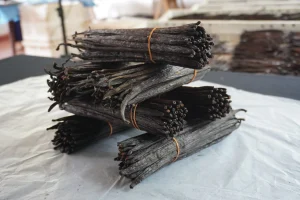
| Flexibility test | Bends without snapping | Knot test: a top Ceylon bean ties in a knot without breaking |
| Appellation | ‘Bourbon’ region-protected name | Bourbon-method cured, but not a Bourbon appellation – we label it Ceylon |
One honest footnote on naming: ‘Bourbon’ originally refers to the Indian-Ocean island region (Madagascar, Comoros, Reunion). Sri Lanka uses the same curing method but cannot wear the label – so when a seller offers you ‘Bourbon vanilla’ at a Ceylon price, ask which island grew it. We always say Ceylon, and we put the moisture number on the page: see our what is Ceylon vanilla explainer.
Price Reality Check: What Each Origin Costs in 2026
Here is where the comparison gets interesting – and where we’ll be blunt. At FOB commodity level, certified Madagascar Grade A traded around $60-120/kg in 2026 after the great price crash from the 2018 peak of $600-800/kg; US retail for quality cured beans still runs $152-241/kg. Commodity Madagascar can be cheap. The catch is what reaches you: collector margins, export authorisations, and – at retail – a ‘Madagascar’ sticker on beans of uncertain cure.
Sri Lanka’s structure is different. Because we cure and export our own crop, our Grade A retail packs start at pocket-money sizes for sampling, and wholesale lots step down transparently – Grade A 7-8 inch wholesale lots tier from $259/kg at 1 kg to $203.50/kg at 10 kg, with organic Grade A available for clean-label brands (organic Grade A 7-8 inch). You are not paying two middlemen for a famous name; you are paying a published per-kilo rate for a spec’d lot. For current market movement, keep our Sri Lanka vanilla bean price guide bookmarked.
Supply Risk: Cyclones vs Quiet Stability
- Madagascar: 70%+ of world supply means world prices hinge on one island’s cyclone season and crop cycles – hence the historic boom-bust chart. Great availability in normal years; sudden spikes and quality drift in bad ones.
- Sri Lanka: a small, stable home-garden crop (100+ ha, wet-zone holdings). No cyclone-driven price shocks – but limited total volume, so large industrial contracts need early booking.
- Buyer’s move: serious extract and private-label producers increasingly dual-source: Madagascar for label familiarity, Ceylon for cost stability and blending complexity.
Sustainability & How the Farms Differ
Ceylon vanilla’s home-garden model is agroforestry by default: vines climb among existing trees in small holdings, hand-pollinated without plantation chemistry, and organic certification is common because the farms were never industrialised to begin with. Madagascar’s volume comes from tens of thousands of small farmers too, but the long collector chain makes lot-level traceability harder – certification exists, yet audit depth varies by exporter. If your brand story needs farm-to-jar traceability, small-origin Ceylon lots are easier to document end-to-end.
Which Origin Should You Buy? A Use-Case Guide
| Your project | Better origin | Why |
| Classic bakery / ice-cream where ‘Madagascar’ on the label sells | Madagascar | Name recognition + the familiar creamy benchmark |
| Homemade or commercial vanilla extract | Sri Lanka (Grade B) | Floral complexity steeps beautifully; cost-per-litre stays sane |
| Vanilla paste, caviar & seed-forward desserts | Sri Lanka (Grade A) | Marshmallow-floral finish shines when seeds are visible |
| Private label / clean-label retail | Sri Lanka organic | Organic small-farm story with lot-level traceability |
| Blending for signature house vanilla | Both | Ceylon lifts top notes; Madagascar anchors the creamy base |
Whichever origin you pick, the grade rules stay identical: plump glossy pods for pod-forward work, drier pods for extract. Our Grade A vs Grade B buyer’s guide and step-by-step extract guide cover both.
Run Your Own Side-by-Side Test (10-Minute Cupping Protocol)
Don’t take anyone’s word for it – including ours. Split one pod of each origin, scrape the seeds into two identical cups of 60 C water (no sugar, no dairy), steep five minutes, then taste in this order: aroma first, then sweetness, then finish. Madagascar will lead with cream and butter; Ceylon will open quieter and finish longer, with floral and faint cocoa notes. Run the same test in warm milk and the gap narrows; run it in 40% vodka for six weeks and Ceylon’s complexity usually widens. Ten minutes and two pods will settle the debate for your own palate and your own product.
- Aroma: buttery-creamy (MG) vs floral-marshmallow (LK)
- Mid-palate: immediate sweet familiarity (MG) vs layered soft sweetness (LK)
- Finish: clean classic close (MG) vs long perfumed-cocoa close (LK)
Sri Lanka vs Madagascar Vanilla: FAQ
Is Ceylon vanilla the same as Bourbon vanilla?
Same species and same curing method, different appellation. ‘Bourbon’ is region-protected to the Indian-Ocean islands (Madagascar and neighbours); Sri Lanka’s beans are Bourbon-method cured but labelled Ceylon. Flavour-wise they are cousins, not clones.
Does Sri Lanka vanilla have less vanillin than Madagascar?
No – well-cured Ceylon lots typically test in the 1.8-2.5% band, equal to or above the 1.5-2.0% commonly quoted for Madagascar. The slow, small-batch sweating and sun-drying cycle is what concentrates vanillin; always request the lot COA from any exporter.
Why is Madagascar vanilla so famous then?
Volume and history: 70%+ of world supply for a century made it the default ‘classic vanilla’ in ice cream, cola and baking. Fame is a supply-chain achievement as much as a flavour one.
Can I substitute Ceylon for Madagascar in a recipe 1:1?
Yes by weight or pod count. Expect a slightly more floral, less buttery top note – most tasters describe it as an upgrade in custards and extract, and imperceptible in spiced bakes.
Which is better for vanilla extract?
For value and complexity, Sri Lanka Grade B: concentrated solids per kilo, floral depth in the steep, and direct pricing. For a label that must say ‘Madagascar Bourbon’, buy Madagascar – just verify cure quality and moisture.
Is Sri Lanka vanilla organic?
Commonly, yes – the home-garden system was never industrialised, so organic certification is straightforward for many lots, including our certified organic Grade A beans.
The Honest Bottom Line
Madagascar earned its crown with a century of volume and the creamiest version of classic vanilla – and if your jar’s selling point is the word ‘Bourbon’, buy it there, carefully. But if you want a refined floral cup, lot-level specs, organic small-farm traceability and a per-kilo price that doesn’t swing with cyclone season, the smaller island makes the smarter buy. Taste both side by side once and you’ll never need this article again – you’ll have your own answer.
Ready to taste the Ceylon side? Start with a sampling pack of Sri Lanka Vanilla Beans Grade A (6-7 inch), scale into wholesale Grade A lots, or browse every origin lot we cure in the vanilla beans category.