
Madagascar Bourbon vanilla beans are among the most familiar ingredients in the vanilla market. You will find the name on whole-bean packs, extracts, pastes, and professional ingredient lists. For many buyers, it is a reference point when discussing a classic vanilla profile.
But what does Bourbon mean? Does it contain whiskey? Is Madagascar vanilla automatically better than vanilla from another country? And where do Sri Lankan beans fit into the comparison?
The useful answers begin with the product itself. Origin gives context, but species, curing, grade, storage, and lot characteristics influence what reaches your kitchen or production line. This guide explains what Madagascar Bourbon vanilla beans are, how to choose them, and when a Sri Lankan alternative is worth evaluating.
What Are Madagascar Bourbon Vanilla Beans?
Madagascar Bourbon vanilla generally refers to cured Vanilla planifolia beans grown in Madagascar. In everyday culinary use, vanilla beans and vanilla pods are two names for the whole fruit sold after curing.
Bourbon is a historical and commercial designation associated with the vanilla tradition of the Indian Ocean region. It is linked to the former name of Réunion, Île Bourbon, rather than to bourbon whiskey.
The term should not be read as a separate vanilla species or a guarantee of a particular laboratory result. A Bourbon label does not establish a universal vanillin percentage, moisture level, grade, or flavor intensity.
Check the complete description. A whole-bean product, a vanilla extract, and a paste can all reference Madagascar Bourbon vanilla while differing substantially in composition, preparation, and use.
Does Bourbon Vanilla Contain Alcohol?
A whole cured Bourbon vanilla bean is not named for an alcohol treatment. The word Bourbon does not mean the pod has been soaked in whiskey.
Alcohol becomes a separate question when you buy extract, paste, or another prepared product. Many traditional vanilla extracts contain alcohol as part of the formulation. A paste may also contain extract or other ingredients that need to be checked.
Read the ingredient list and request relevant documentation if you need an alcohol-free product or a particular dietary certification. Neither the country of origin nor the word Bourbon establishes those characteristics.
Why Is Madagascar Vanilla So Well Known?
Madagascar has an established place in international vanilla trade. Its beans are widely used in culinary products and commercial vanilla ingredients, giving many buyers experience with the origin.
That familiarity can be useful. A bakery may already have a recipe developed around a Madagascar ingredient, while a manufacturer may use an approved Madagascar lot as a sensory reference for future purchases.
However, market recognition is not the same as a universal quality certificate. Describing an origin as a gold standard is a statement of reputation, not proof that every shipment is superior to every competing origin.
Evaluate the supplier and the proposed product. A clearly specified, well-handled lot from another origin may be more appropriate for your recipe than a poorly described Madagascar offer.
What Does Madagascar Bourbon Vanilla Taste Like?
Madagascar planifolia vanilla is often associated with a rounded, familiar vanilla profile that buyers describe using words such as creamy, sweet, or rich. Those descriptions express sensory impressions; they do not mean the beans necessarily contain added cream or sugar.
Individual lots can differ. Harvest maturity, curing, conditioning, storage, and the final preparation influence aroma and flavor. A recipe containing chocolate, spices, dairy, or alcohol will also change what you perceive.
Rather than treating a country name as a fixed tasting note, evaluate the actual material in your intended application. Smelling a pod is useful, but it does not fully predict how an extract or finished dessert will taste.
For a fair comparison, keep the recipe, dosing approach, and preparation method consistent. Otherwise, a change in ingredient quantity may be mistaken for a difference caused by origin.
How Curing Shapes the Finished Bean
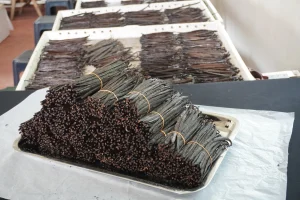
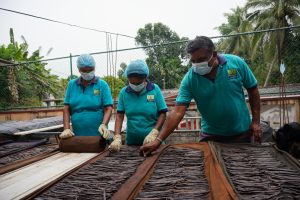
Freshly harvested green vanilla is not the dark, aromatic ingredient most bakers recognize. Curing develops its familiar characteristics through a sequence that commonly involves blanching or another killing treatment, sweating, drying, and conditioning.
The details vary between producers. Managing the process influences moisture, appearance, handling, and aroma development. Good purchasing therefore considers curing and storage information where relevant, not just the location where the orchid grew.
A photograph cannot establish whether every stage was managed well. Ask for the product details and supporting evidence needed for your application, and inspect the condition of the actual beans you receive.
Grade A vs Grade B Madagascar Vanilla Beans
Grade A for Whole-Bean Handling
Grade A is commonly used for gourmet beans intended for splitting, scraping, and cooking. They are often more flexible and easier to work with when a recipe needs seed-filled pulp or an attractive whole pod.
For pastry kitchens and retailers, size, appearance, condition, and consistency may all matter. State those requirements rather than assuming the grade label guarantees the exact characteristics you need.
Grade B for Extraction Applications
Grade B is commonly marketed for extract-making and infusion. These beans can be drier or less visually uniform than gourmet beans while still being suitable for their intended process.
Supplier grading conventions vary. Compare pack weight, product description, available specifications, and lot information. Do not assume that Grade B always has a fixed moisture percentage or that Grade A automatically contains more vanillin.
For home extraction, a measured recipe is more repeatable than a fixed bean count. For manufacturing, your process and agreed acceptance criteria should guide selection.
Choosing Madagascar Vanilla for Your Recipe
Custards, Ice Cream, and Pastry Cream
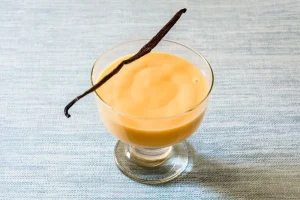
Whole beans can provide visible seeds and allow you to steep the split pod in a suitable recipe liquid. Choose sound beans that are practical to split and scrape, and follow the recipe’s preparation and removal instructions.
If you prefer convenient dosing, a suitable extract or paste may be more practical. Product form can matter as much as origin when choosing an ingredient for a busy kitchen.
Cakes, Cookies, and Chocolate Desserts
Consider whether the recipe benefits from visible seeds or whether a measured liquid ingredient is easier to use. In a dark cake or strongly flavored dessert, seed appearance may offer little practical benefit.
Select the format that distributes evenly and fits your workflow. More expensive whole pods are not automatically the best operational choice for every product.
Extract-Making and Larger Production
Confirm the bean weight, available lot information, and any required technical parameters. Extraction performance depends on the material and the process, not simply the origin on the label.
If you require a certificate of analysis, ask which sample or lot it covers and how the results are reported. A historical report should not be treated as a permanent specification for all future supply.
Sri Lankan Vanilla: An Alternative Worth Testing
Sri Lanka offers another origin to consider when selecting vanilla. Instead of assuming it must replace Madagascar in every application, evaluate whether a particular Sri Lankan product fits your flavor preference, specification, and purchasing plan.
The most useful comparison is between defined products or lots. Check the species where relevant, product form, grade, weight, condition, and available supporting information. Do not assume that a shared species makes two lots identical or that a different origin makes one inferior.
For whole-bean recipes, explore our Sri Lankan Grade A vanilla beans: https://purevanillabeans.com/product/buy-bulk-grade-a-vanilla-beans/. Confirm the current options and product details before choosing your pack.
For extract-making, review our Sri Lankan Grade B options: https://purevanillabeans.com/product/sri-lanka-grade-b-vanilla-beans/. Ask about weight and any application-specific requirements rather than comparing offers on bean count alone.
How to Compare Madagascar and Sri Lankan Vanilla Fairly
Start with Equivalent Product Forms
Compare whole beans with whole beans, or evaluate extracts with clearly understood formulations. A finished paste cannot be judged against a raw pod simply by smelling both containers.
If concentration or ingredient composition differs, document the difference before drawing conclusions about origin.
Define Your Dosing Method
For a practical recipe trial, you might compare equal as-received bean weights and record the condition of each sample. That is useful for your actual kitchen, but it is not the same as standardizing dry matter or analytical vanillin content.
For technical work, define the comparison method that answers your purchasing question. Moisture and reporting basis may need attention when interpreting laboratory results.
Evaluate in the Finished Application
Make a small trial using the same recipe, equipment, and preparation method. Assess aroma, flavor balance, appearance, and ease of handling. Where practical, label samples without origin names to reduce expectations influencing the result.
Record your observations and repeat the comparison if the decision has major production implications. One informal tasting should not be presented as proof that an entire country’s vanilla is better.
Compare the Complete Commercial Offer
Review quantity, packaging, delivery scope, lead-time estimates, documentation, and payment terms. A lower product price may not mean a lower delivered cost or a better fit for your business.
For recurring supply, discuss how lot changes and acceptance requirements will be handled. Diversifying origins can be part of a purchasing strategy, but each alternative still needs appropriate evaluation.
Storage and Quality Checks
Keep whole cured vanilla beans in clean, dry, airtight packaging, away from heat and direct sunlight. Follow the supplier’s storage instructions and keep different lots identified where practical.
Inspect beans before use. Dryness alone does not automatically mean spoilage, especially when comparing grades. However, suspicious fuzzy growth, unexpected dampness, or a musty odor needs attention.
Do not assume every pale mark is harmless vanillin crystallization. If you are uncertain, avoid tasting the material and contact the supplier. Soaking a suspect ingredient in alcohol is not a reliable way to make it safe.
Frequently Asked Questions
Is Bourbon Vanilla the Same as Madagascar Vanilla?
The terms overlap, but they are not completely interchangeable geographical descriptions. Madagascar Bourbon vanilla identifies Madagascar-grown vanilla within the Bourbon designation. Bourbon terminology also has a broader historical association with the Indian Ocean vanilla tradition.
Is Madagascar Bourbon Vanilla a Separate Species?
No. Madagascar Bourbon vanilla generally refers to Vanilla planifolia, not a separate species called Bourbon. Verify the product description if species identification matters to your application.
Are Madagascar Beans Always Better Than Sri Lankan Beans?
No universal ranking applies to every lot and recipe. Compare actual product characteristics, supporting information, application performance, and commercial terms. Origin provides context, not a complete verdict.
Can I Replace Madagascar Beans with Sri Lankan Beans?
You can evaluate a suitable Sri Lankan product in the same application, but expect some sensory variation. Use a consistent starting recipe and document any adjustments rather than assuming a perfect one-to-one flavor match.
Does a Darker Bean Have More Flavor?
Appearance alone does not establish flavor intensity, analytical composition, or safety. Read the product description, inspect condition, and evaluate the ingredient in use. Do not choose a bulk order from color alone.
Choose Vanilla by Performance, Not Reputation Alone
Madagascar Bourbon vanilla beans remain a familiar reference point for many kitchens and ingredient buyers. Understanding the name helps you shop confidently, but the real decision comes down to the material, the supplier, and your intended use.
Evaluate grade, condition, documentation, and finished-product performance together. If you are considering Sri Lankan vanilla for your next recipe or bulk order, share your requirements through https://purevanillabeans.com/#quote-form and ask about current product options before you commit.