
You started a jar of vanilla, waited for the liquid to turn brown, and expected a rich baking ingredient. Instead, it still smells mostly like vodka. Should you add more beans, keep waiting, or start again?
Successful DIY vanilla extract is less about finding a secret ingredient and more about controlling a few basics: bean weight, measured alcohol volume, suitable ingredients, and realistic timing. Clear batch records also make it easier to understand what happened when the result is not what you expected.
This guide focuses on planning and troubleshooting an alcohol-based home infusion. If you need the full preparation sequence first, follow our homemade vanilla extract tutorial, then return here to refine your method and avoid common mistakes.
Start with a Measured Home Recipe
A convenient home starting point is approximately 28 grams of vanilla beans for 237 millilitres of 40% ABV vodka. That is about 1 ounce of beans by weight for 8 US fluid ounces of spirit.
This is a practical home recipe, not a claim of regulatory approval or laboratory-confirmed finished strength. Commercial extract standards concern the finished product and include details that a simple kitchen ratio does not establish.
For a rounded metric calculation, use about 0.12 grams of beans per millilitre of alcohol. That gives approximately 30 g for 250 ml, 60 g for 500 ml, or 90 g for 750 ml. Keep the same calculation method throughout the batch.
Use our vanilla extract bottle-size guide if you need to scale another quantity. Measure the alcohol you actually add, not the total capacity printed on an empty jar.
Why Bean Count Produces Unpredictable Results
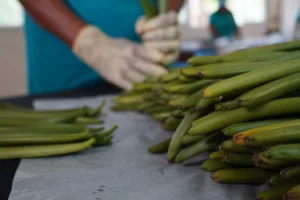
Instructions such as “use six beans” are convenient but incomplete. Pods vary in length, thickness, and moisture, so the same number from two packets can represent different weights of material.
Weigh the beans going into your own jar. If the product is sold by count, ask for an approximate pack weight before deciding how much spirit to buy. Do not assume that a familiar-looking bundle will produce the same result as your previous purchase.
Weight does not eliminate every difference between natural ingredients. Curing, moisture, storage, and individual lot characteristics still matter. However, a recorded weight gives you a more useful starting point than an unverified count.
Choose Beans That Fit the Job
Both gourmet and extraction-grade beans can be used in a home infusion. Grade B is commonly marketed for extraction and may be drier or less visually uniform. Grade A can also work; it is not limited to recipes requiring scraped seeds.
Supplier grading conventions vary, so review the product description rather than treating the grade as a complete specification. Our Grade A vs Grade B comparison explains the practical difference.
Explore our Sri Lankan Grade B vanilla beans when planning an extraction batch. Confirm the available quantity and relevant weight information before ordering.
Always start with sound material. Suspicious fuzzy growth, unexpected dampness, or a musty odor should not be dismissed because the beans will sit in alcohol. An infusion is not a reliable way to make contaminated ingredients safe.
Check the Spirit Before You Begin
Plain, unflavored 40% ABV vodka is a straightforward first choice because its relatively neutral character makes the vanilla easier to evaluate. Other suitable spirits can introduce additional flavors, which may be welcome but can complicate comparisons.
Check the ABV on the bottle. In US terminology, 40% ABV is 80 proof, but proof conventions are not universal. ABV is the clearer reference when comparing products from different markets.
Use only a food-grade spirit. Never use rubbing alcohol, denatured alcohol, or another non-food-grade solvent. Do not add water, fruit, or syrup to this recipe and assume the formulation remains equivalent.
If you need an alcohol-free or specifically certified ingredient, choose a product developed and documented for that requirement. Simply leaving out the vodka does not create a suitable alternative recipe.
Plan the Container and Batch Record
Choose a clean, completely dry glass jar with a sound, tightly fitting lid. It should hold the measured spirit, the beans, and a little headspace without crowding the ingredients.
A 250 ml bottle cannot necessarily hold 250 ml of spirit plus beans. Use a larger infusion jar or reduce both ingredients proportionally. Do not pour out an unmeasured amount of spirit and pretend the original calculation still applies.
Record the bean origin or product, bean weight, spirit type and ABV, measured volume, preparation method, and start date. If you change anything later, record that change as well.
A useful label makes it possible to compare two jars honestly. Without it, a stronger result might reflect extra beans, a smaller liquid volume, or a longer infusion rather than the origin you intended to test.
How Long Does DIY Vanilla Extract Take?
Plan in months rather than days. Begin checking flavor after a few months, with six to twelve months as a useful planning window for a fuller home infusion. That is an expectation, not a universal deadline or safety test.
Bean preparation, spirit, loading, temperature, and your preferred flavor all influence when the infusion becomes useful. A jar can darken before it develops the balance you want. Brown color alone does not prove readiness or strength.
Evaluate a small amount in a familiar recipe or a suitable food base rather than judging only by the smell at the bottle opening. The alcohol remains part of the formulation, and a strong spirit note does not automatically mean the batch has failed.
Do not promise that a jar started shortly before a holiday will be fully developed in time. If giving an unfinished infusion, clearly label it as in progress and explain that the recipient should reassess it later.
Common Mistake 1: Adding Unmeasured Alcohol
Long pods may stick above the surface, tempting you to keep pouring until everything is covered. That changes the ratio unless you measure the addition and adjust the bean weight.
Instead, cut the pods into shorter pieces or choose a better-fitting jar. Keep the pieces submerged while preserving the intended recipe. If you do add more spirit, record the new total and calculate the appropriate bean amount.
Common Mistake 2: Assuming More Beans Mean Instant Extract
Increasing bean loading can change the infusion, but it does not remove the need for extraction time. A densely packed jar can also be awkward to handle and may retain more liquid when you decant.
If you experiment with a stronger batch, label it clearly and leave sufficient space. Do not describe it as legally standardized double-fold extract without evidence relevant to the finished product.
Common Mistake 3: Heating Spirits to Speed Things Up
Do not microwave, simmer, or warm an alcohol-filled jar to accelerate this home method. Spirits are flammable, and heating introduces risks that are not part of the room-temperature recipe.
Keep the sealed jar away from heat and sunlight. Give it a gentle shake periodically and inspect the seal. Patience is a more appropriate approach here than improvising a heated extraction process.
Common Mistake 4: Treating Refilled Jars as Consistent
Topping up a partly used jar adds fresh alcohol and dilutes what remains. The old beans have already released some of their flavor, so the original starting ratio no longer describes the current contents.
For more predictable results, keep a mature bottle for use and start a separate measured batch with fresh beans. You can experiment with a reused-bean jar, but do not assume it will match the strength of the first infusion.
Common Mistake 5: Confusing Sediment with a Diagnosis
Seeds and fine pod particles can settle in an infusion. That does not mean every visible change is harmless, and appearance alone cannot establish safety.
If you see suspicious growth or notice an unexpected off odor, do not taste the batch to investigate. Do not assume straining or adding more alcohol will rescue it. Discard a suspect preparation rather than trying to remove only the visible problem.
Use clean, dry equipment and keep wet utensils away from the jar. Good handling starts before the first ingredient goes in.
Common Mistake 6: Expecting the Starting Volume as Finished Yield
Beans retain liquid, and filtering can cause further losses. A jar started with 500 ml of spirit may not provide five completely full 100 ml bottles after straining.
Plan gift quantities with that uncertainty in mind. Avoid squeezing or handling wet material carelessly just to reach an exact bottle count. Record your actual recovered amount so future batches can be planned more realistically.
What to Do When the Flavor Seems Weak
First, check your records. Was the bean weight adequate for the measured volume? Was the jar topped up? How long has the batch actually infused? Did you use a strongly flavored spirit that changes your perception of the vanilla?
If the preparation appears sound and is simply young, more time may be appropriate. If you add fresh beans, record the extra weight and date; those beans need their own extraction time.
Do not add water to reduce the alcohol impression. That changes the formulation and may create a different storage situation. If consistent strength matters, begin a fresh measured batch rather than repeatedly adjusting an undocumented jar.
Store the Beans and Finished Infusion Separately
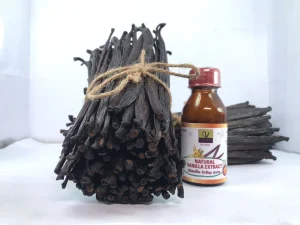
Keep unused cured beans in clean, dry, airtight packaging away from heat and direct sunlight, following supplier guidance. Our vanilla bean storage guide explains the routine and warning signs.
For the infusion, use a tightly closed container in a suitable cool, dark location. Keep the label and inspect before use. This home method does not establish a tested expiry date or guarantee indefinite shelf life.
Do not return wet, alcohol-soaked beans to unused stock or put them directly into sugar intended for long-term pantry storage. Their condition differs from that of a dry cured pod.
Frequently Asked Questions
Can I Use Whole Beans Without Splitting Them?
You can experiment, but opening or chopping the pods exposes more material to the liquid and is a practical preparation method. Keep the preparation consistent when comparing batches rather than changing several variables together.
Should I Scrape Out and Discard the Seeds?
No. For this infusion, keep the pod material and seed-filled pulp together. Scraping is not a reason to throw away part of the ingredient. Fine particles can be filtered later if you prefer a clearer appearance.
Can I Sell My Homemade Extract?
A home recipe alone does not establish legal compliance or a validated commercial process. Check the food, alcohol, labeling, and business requirements that apply in your market before considering sales.
Should I Buy Samples Before a Larger Order?
For a larger purchase, evaluating the proposed material can be useful. Ask about vanilla sample options and confirm quantity, cost, delivery, and the sample’s relationship to the intended bulk lot.
Make Your Next Batch Easier to Repeat
Better DIY vanilla extract begins with a measured recipe and a clear label. Use suitable ingredients, allow realistic time, and change one variable at a time when experimenting.
For business quantities, explore our wholesale vanilla options or request a quotation with your intended use, quantity, destination, and documentation requirements. A planned batch is easier to evaluate than a jar built on guesswork.