
You are comparing vanilla beans and find three descriptions: Tahitian, Bourbon, and Sri Lankan. Each sounds like a distinct choice, but the names do not all describe the same kind of difference. One can refer to a species or a place, another has a historical trade meaning, and the third identifies an origin.
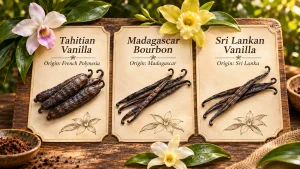
Understanding that distinction makes shopping easier. Tahitian vanilla beans are often associated with Vanilla × tahitensis, while Bourbon vanilla commonly refers to Vanilla planifolia within an established commercial tradition. Sri Lankan describes where the vanilla was grown, not a separate species.
The most useful comparison looks beyond the front label. Check the species where relevant, actual growing origin, product form, grade, condition, and intended use. This guide explains how to compare the options without assuming that a country name guarantees a fixed flavor or quality level.
First, Separate Species from Origin
Species identifies the botanical material. Origin identifies the location where it was grown. A commercial description may also include curing style, grade, length, or a historical designation.
These categories overlap, but they are not interchangeable. Beans associated with a species can be grown in more than one country, and beans from one country can differ between producers and lots.
For example, Tahitian-style or tahitensis descriptions should not automatically be interpreted as proof of cultivation in French Polynesia. Ask for the actual origin when that distinction matters to your recipe, purchasing specification, or product label.
Similarly, a Sri Lankan listing does not establish a particular species unless the product information confirms it. A useful supplier description tells you what is being offered rather than asking the name to do all the work.
What Are Tahitian Vanilla Beans?
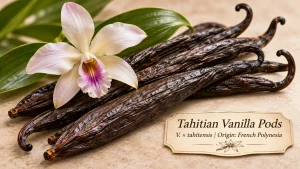
Tahitian vanilla beans commonly refer to vanilla associated with Vanilla × tahitensis. Commercial usage varies, so confirm both botanical identification and geographic origin when buying.
This vanilla is often described using floral or fruit-associated sensory terms. Those are broad expectations, not a promise that every pod will produce the same aroma in every recipe. Growing conditions, curing, storage, and the particular lot influence the result.
A whole bean sold as Tahitian should also be evaluated for its grade, weight, condition, and handling characteristics. The name does not automatically tell you whether the pod is easy to scrape or suited to a particular infusion method.
If a recipe specifically requires Tahitian vanilla, look for the author’s intended product and consider why it was chosen. Replacing it may be practical, but expect some sensory variation rather than assuming an exact flavor match.
What Is Bourbon Vanilla?
Bourbon vanilla is a historical and commercial designation commonly associated with Vanilla planifolia and the Indian Ocean vanilla tradition. It is linked to Réunion’s former name, Île Bourbon, rather than bourbon whiskey.
Madagascar Bourbon vanilla is a familiar example. The designation does not mean that the whole pods were soaked in alcohol, nor does it establish a universal moisture or vanillin specification.
Planifolia vanilla is often associated with a familiar, rounded vanilla profile. Buyers may describe particular lots as creamy, sweet, or rich, but these words are sensory impressions rather than evidence of added dairy or sugar.
Our Madagascar Bourbon vanilla guide explains the terminology, uses, and buying considerations in more detail. Read the full product description instead of treating Bourbon as a complete quality certificate.
Where Does Sri Lankan Vanilla Fit?
Sri Lankan vanilla identifies a growing origin. It should not be placed beside planifolia and tahitensis as though all three were equivalent species names.
When reviewing a Sri Lankan product, confirm the botanical information where necessary, then consider the actual grade, lot, curing, and storage details. The useful question is whether that material fits your recipe or process.
Sri Lankan beans can be evaluated as an alternative origin for whole-bean cooking, extraction, or other applications. They should not be presented as automatically identical to Madagascar material or universally better than Tahitian vanilla.
For a closer purchasing comparison, read our Sri Lanka vs Madagascar vanilla beans guide. Use origin as part of your evaluation rather than as a substitute for product information.
How Do the Flavor Profiles Compare?
Tahitian: Explore Floral and Fruit-Associated Notes
Tahitian vanilla is often chosen by cooks looking for a different aromatic emphasis from a familiar planifolia profile. A delicate custard, cream-based dessert, or simple preparation can be a useful place to evaluate that difference.
Do not assume it works only in cold desserts or that its aroma behaves identically under every heating method. The finished result depends on the recipe and process. Test the actual ingredient rather than relying on an absolute rule about temperature.
Bourbon: A Familiar Vanilla Reference
Bourbon-style planifolia ingredients are widely used as a reference in baking and dessert preparation. That familiarity may make them a convenient starting point when developing a vanilla-forward recipe.
However, two Bourbon products can differ substantially in formulation or condition. Comparing a whole bean with a concentrated paste tells you more than one thing at once, so keep the product formats clear.
Sri Lankan: Evaluate the Proposed Lot
For Sri Lankan vanilla, assess the actual sample rather than expecting a single national tasting profile. A supplier may describe a product using cocoa, dried-fruit, floral, or creamy notes, but your recipe and perception still determine the practical result.
A controlled trial is a better basis for selection than a claim that one origin always has more complexity. Record what you notice and repeat the trial if it will influence a larger purchasing decision.
Grade Matters Alongside Origin
A flexible gourmet bean and a drier extraction bean can come from the same origin while serving different purposes. Grade A is commonly associated with easy splitting, scraping, and whole-pod handling. Grade B is commonly marketed for extraction.
Supplier grading conventions vary, so read the specifications rather than assuming the grade name has one universal definition. Origin does not remove the need to check size, condition, pack weight, and intended use.
Our Grade A vs Grade B vanilla beans comparison explains this distinction. Choose the type of material you need first, then compare suitable products within that category.
Which Vanilla Should You Use for Baking?
For cakes, cookies, and brownies, consider how prominent vanilla will be and whether visible seeds matter. A dark chocolate mixture provides a different setting from a simple butter cake.
Use a familiar recipe when evaluating a new bean. Keep other ingredients and preparation steps constant so you can understand the effect of the vanilla rather than several simultaneous changes.
Whole beans are not automatically the most convenient option for every bake. Extract or paste may be easier to measure and distribute. Our vanilla extract vs vanilla bean paste guide explains the practical format differences.
There is no universal species or origin winner for all baking. Preference, availability, cost, and formulation requirements all deserve a place in the decision.
Which Beans Suit Custard, Ice Cream, and Gelato?
Pale, relatively simple desserts can make both vanilla aroma and seed appearance more noticeable. Whole beans let you scrape the seed-filled pulp and, where the recipe directs, steep the outer pod in liquid.
For these applications, compare ease of handling as well as flavor. A difficult-to-scrape pod may require a different preparation method even if its origin is the one you initially wanted.
Evaluate the dessert at its intended serving temperature. Warm custard and frozen ice cream do not create the same tasting conditions, and a plant-based base can introduce its own flavors.
Start with a small trial rather than committing a full production batch to an unfamiliar ingredient. Follow the recipe’s food-handling instructions throughout preparation and storage.
Which Vanilla Works for Homemade Extract?
Several species and origins can be explored in a home infusion. Choose sound beans, use a measured recipe, and record the origin and preparation method for each batch.
Comparing a fixed number of pods is less consistent than weighing them because pod sizes and moisture vary. Even equal as-received weights do not guarantee identical dry matter or vanillin loading.
For the preparation sequence, follow our homemade vanilla extract guide. Use the bottle-size calculation guide when planning a different volume.
If you want an extraction-oriented Sri Lankan option, explore our Grade B vanilla beans and confirm the weight required for your batch.
How to Run a Useful Side-by-Side Comparison
Step 1: Identify the Products Clearly
Record the stated species, actual origin, grade, pack weight, and supplier. Include the lot reference where available. Do not compare a vaguely labeled bean with a fully specified product as though all missing details were equivalent.
Step 2: Choose One Application
Use one recipe you know well. Keep the equipment, quantities, preparation method, and storage conditions consistent. For a practical kitchen comparison, equal bean weight can be a starting point, but document that this is the method you chose.
Step 3: Taste Without the Price Story
Where practical, identify samples with simple codes instead of origin names or prices. Assess aroma, balance, aftertaste, appearance, and handling. Ask tasters what they notice before telling them which ingredient costs more.
Step 4: Compare the Complete Purchase
Review usable quantity, preparation time, packaging, delivery scope, and documentation as well as sensory performance. The most expensive packet is not automatically the best fit, and the lowest price does not always represent the lowest cost per recipe.
Do Vanillin Percentages Settle the Comparison?
No. Vanillin is an important aromatic compound, but its concentration is not a complete description of vanilla character. Different species and lots can have different aromatic balances.
Check the reporting basis before comparing analytical figures. A dry-basis result is not directly interchangeable with an as-received result, and a historical test does not automatically describe a new lot.
Our vanillin content guide for buyers explains these limitations. Use analysis to answer defined questions, not to turn a complex ingredient into a single universal ranking.
Frequently Asked Questions
Are Tahitian Vanilla Beans Always Grown in Tahiti?
Not necessarily in commercial usage. Tahitensis-related descriptions can appear on vanilla grown elsewhere. Confirm the stated geographic origin when that distinction matters to your purchase or labeling.
Does Bourbon Vanilla Contain Whiskey?
The name itself does not indicate whiskey. Whole Bourbon vanilla pods are named through a historical designation. Prepared extracts and pastes have separate formulations, so check their ingredients for alcohol information.
Is Sri Lankan Vanilla a Separate Species?
No. Sri Lankan identifies origin. Check the product information for species where relevant, and evaluate the material’s grade, condition, and suitability for your intended use.
Can I Substitute One Origin for Another?
Often you can evaluate another suitable bean in the same application, but expect possible sensory differences. Use a consistent trial recipe, follow the preparation method, and record any adjustment instead of assuming an exact flavor match.
Choose the Bean That Fits Your Recipe
Tahitian vanilla beans, Bourbon vanilla, and Sri Lankan vanilla are easier to compare once you separate species, origin, and commercial naming. None of those descriptions replaces checking the ingredient you will actually receive.
For a Sri Lankan whole-bean option, explore our Grade A vanilla beans. If you are planning a business purchase, request a quotation with your application, quantity, destination, and essential requirements.